Chronic Illness Cutlery
This blog is named The Spoonie Saga as a sort of homage to The Spoon Theory originated by Christine Miserandino from But You Don’t Look Sick in 2003, but also because I actively use the theory in my day to day life to explain what life is like when you have chronic illnesses to contend with.
Over the years, the theory has been adapted and expanded on, and now we have a complete set of cutlery at our disposal to explain the difference between a healthy person and a “Spoonie” (a term originating from the theory to identify people with chronic illness(es)).
Cutlery Crash Course
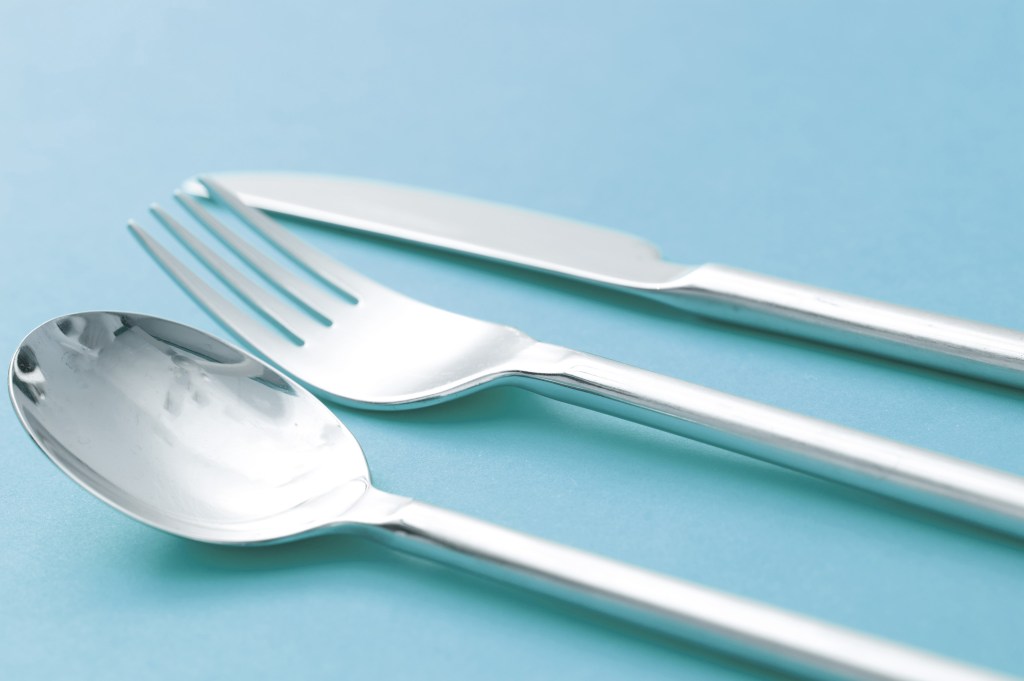
As pictured above, the Cutlery consists of Spoons, Forks and Knives, each of them representing a different aspect of chronic illness and what it’s like to live with one or several of them.
But why cutlery?
In the original Spoon Theory, the spoon(s) were a coincidence; Christine and a friend were out having a meal, when suddenly the friend asked what it was like to be sick all the time. As described in the link above, Christine grabbed a bunch of spoons to explain the energy-drain, and lower energy to begin with, of chronic illness and fatigue.
Spoons represent energy. You are given a number of spoons to spend each day. The number varies from person to person, and for most of us, from day to day. It succinctly showcases the unpredictability of having a chronic illness, and how you don’t know how many spoons you will wake up with tomorrow. Adaptations of the theory have used other items or concepts in place of Spoons, but the general idea remains the same – you are given a set number, and you have to choose wisely when and how you spend them.
As the theory was expanded upon, people incorporated other cutlery. In 2018, a blog post depicting The Fork Theory graced the internet, and thus offered a corollary to the Spoon Theory. Forks represent the stressors in our lives. While the Fork Theory initially concerned itself with explaining the reasons for neurodivergent folks sometimes “shutting down” or behaving in “odd” ways, it can also be applied to nearly all other chronic illnesses, and especially mental illnesses.
Where the Spoons are used to visually represent conservation of energy, Forks have a limit; it is a variation of the proverbial straw that broke the camel’s back. The good news is that Forks can be removed, while once a Spoon is gone for the day – it’s gone. Forks come in varying sizes and numbers, and people generally have varying limits of how many forks, or how big of a fork, they are willing to deal with in a given day. The Fork limit also impacts your ability to spend, or even access, Spoons: When the Fork limit is reached, and if you can’t get rid of any forks currently stuck in you, you can’t muster up any Spoons either.
While looking up the correct links to the Spoon and Fork blog posts, I stumbled upon The Unified Cutlery Theory from 2020 – completing the Cutlery Set by including Knife Theory. The Knife Theory also works as a corollary to both Spoons and Forks in that Knives represent overspending spoons or digging your heels in in spite of the maximum amount of forks, but at a cost: Knives essentially steal Spoons from tomorrow or moves the limit of Forks. Knives are pushing yourself beyond your limits when your mind and body is screaming for you to stop.
Cutlery Cliffs Notes
Spoons – unit of measurement of energy you are allotted every day, and what each task will cost you.
- Number of Spoons allotted varies, person to person and day to day.
- Number of Spoons it costs to do a given task varies, person to person and day to day.
- Once the Spoons are spent, they are gone.
Forks – unit of measurement of stressors you are able to handle, has a set limit.
- Number of Forks you can deal with varies, person to person and day to day.
- Size of Forks may vary (small, but many, for minor inconveniences; large, but few, for big important things.)
- Forks can be removed; smaller forks are easier to remove than large ones.
Knives – unit of measurement of last ditch-resources.
- Knives do not have a set number, but take away from Spoons and/or Forks when used.
- May vary in size, much like Forks.
- Spending Knives comes with increased risk of fatigue and permanent depletion of Spoons.
- Not everyone are able to reach for Knives once their Spoons are gone, or they have not yet removed enough Forks.
The Spoonie Saga
As mentioned initially, this blog is named The Spoonie Saga as a homage to the original concept, but also because living with a chronic illness – or five – is indeed a seemingly never-ending Saga of doctor’s appointments, trial and error of treatments and medications, being diagnosed – then later re-diagnosed, spending Spoons and dodging Forks.
I wanted to show what it is really like. Not a glorified woe is me, nor a pile of toxic positivity. I can only speak for myself, but in that, I hope that others also may relate on some level.
And for the Muggles (the non-Spoonies) out there, I hope your take-away from this blog is a little more knowledge, perhaps a little more understanding, and above all – some insight into what daily life for Spoonies can be like. Chronic (Incurable) Illness is something you don’t get – until you get it.
And I hope you never do.

 The Spoonie Saga