I am currently in the process of applying for Disability Benefits, which – in my country – is a lengthy process wherein you are asked to jump through a whole lot of hoops to meet the “requirements” set in place. Basically: I have to prove that I am, in fact, unable to return to the work force. Diagnosis alone is generally not a “good enough” reason to be granted Disability Benefits – but what the diagnosis does to you is what is used to determine the degree of disability, and the likelyhood of you returning to a normal job. Some diagnoses are exempt from this rule, but very few, and people with these diagnoses usually end up on Disability Benefits even before they start their first job.
The way it usually works, if you’re working a normal job, is that you get sick; you then get sick leave for up to 12 months; when those 12 months are up, you transition into a temporary benefits program designed to get you back into the normal workforce. You get a fraction of your salary for up to 3 years, and you have to report in every 2 weeks (online registration form) to keep your benefits coming in. For many, this is where it ends.
For some, like me, this only serves as a way to “prove” that I’m too sick to return to the normal workforce. If I couldn’t be rehabilitated enough after the total of 4 years out of commission, I probably shouldn’t go back to work just yet… Most of the time, the Disability Benefits Organization decides, after you have jumped through their hoops during the temporary benefits program, that you can go ahead and fill out the application and start the process of claiming Disability.
The Disability Benefits here also have something called “Young Disabled” – an additional sum of money granted if your ailments started before you turned 26. In order to be entitled to this extra benefit, though, you will have to apply for Disability before you turn 36. Because I was not yet “pre-approved” to apply for Disability Benefits, I did the ballsy move of applying anyway – to ensure I had at least applied before I turned 36, so I could fight for my right of the “Young Disabled” benefits.
Back in 2010, I was diagnosed with Bipolar Disorder and Panic Disorder by a specialist team at the Psychiatric Hospital in my hometown. In my diagnostic papers from back then, it is stated that my diagnoses started at least 5 years prior to the time of diagnosing – well before I turned 26, in other words.
Now, one would think this was grounds enough to grant me the “Young Disabled” part of the Disability Benefits, but since I applied by my own accord and not after I had been given the go-ahead to do so, the Disability Benefits Organization requested I undergo a new psychiatric assessment, to verify the initial claim (from the specialist team).
Fair enough.
I was sent to a psychiatrist (of the Organization’s choosing) at the end of June this year (2021), and embarked on a 7-hour long session. I opted to forgo taking breaks during those hours, as that would just prolong the session as a whole. I knew I would be out cold with fatigue for the rest of the day anyway, so I didn’t want to drag the session out if I could at all prevent it.
After the session was over, and I had signed a consent form for the report to be sent to my GP’s office (to be put in my medical journal), the psychiatrist informed me of two major pieces of information: My Fibromyalgia-diagnosis was most likely wrong, and should be changed to Myalgic Encephalomyelitis (Chronic Fatigue Syndrome), as my symptoms seemed to fit better with that diagnosis, and my Fibromyalgia was not diagnosed by a specialist in rheumatic diseases, but rather by my GP. He did not, however, rule out the possibility of me having both Fibromyalgia and ME, so there is that…
I also made sure I got a copy of said report, as I like having all my medical documents myself.
In addition to verifying my existing diagnoses of Bipolar Disorder and Panic Disorder, he also diagnosed me with Schizoid Personality Disorder (Schizoid PD or SPD for short). It sounds scarier than it actually is, but it does explain a lot.. The psychiatrist suggested that my Bipolar and Panic had masked the symptoms of the SPD, causing it to go undetected for years. Now that my Bipolar and Panic is well managed and under control, the symptoms of the SPD could surface and be diagnosed as such. He also explained how the SPD has a given limit for what it can “take” before it starts triggering the Bipolar and Panic, and that those in turn cause my widespread pain and chronic fatigue symptoms.
So – …what is Schizoid Personality Disorder?
The definition of a “Personality Disorder” from Wikipedia is as follows:
Personality disorders (PD) are a class of mental disorders characterized by enduring maladaptive patterns of behavior, cognition, and inner experience, exhibited across many contexts and deviating from those accepted by the individual’s culture
https://en.wikipedia.org/wiki/Personality_disorder
These disorders are separated into three “Clusters” (groups) based on their main feature; Cluster A (odd or eccentric), Cluster B (dramatic) and Cluster C (anxious). There is also a fourth Cluster, for those disorders that do not fit into these categories, the “NOS (Not Otherwise Specified) Cluster”.

Schizoid PD falls under Cluster A, the “odd” or “eccentric” category. According to this Psychology Today article on the subject, people with SPD are the typical “Loner” types who have limited range of emotional expression, and even limited emotional experience.
The same article highlights the symptoms of this disorder, as laid out by the DSM-5. These include, but are not limited to, social withdrawal, a strong preference for solitary activities, avoidance of activities that involve prolonged social interaction, few interests, and a general flattened affect (little to no expression of mood changes).
Given the name of the disorder, it sounds scary – it sounds eerily similar to Schizophrenia, which pop-culture and media has taught us is a scary thing to have. Schizoid PD and Schizophrenia may share a few shared characteristics, but they are not the same thing. However, studies have found that you run a higher risk of developing Schizoid PD if family members have illnesses such as Schizophrenia.
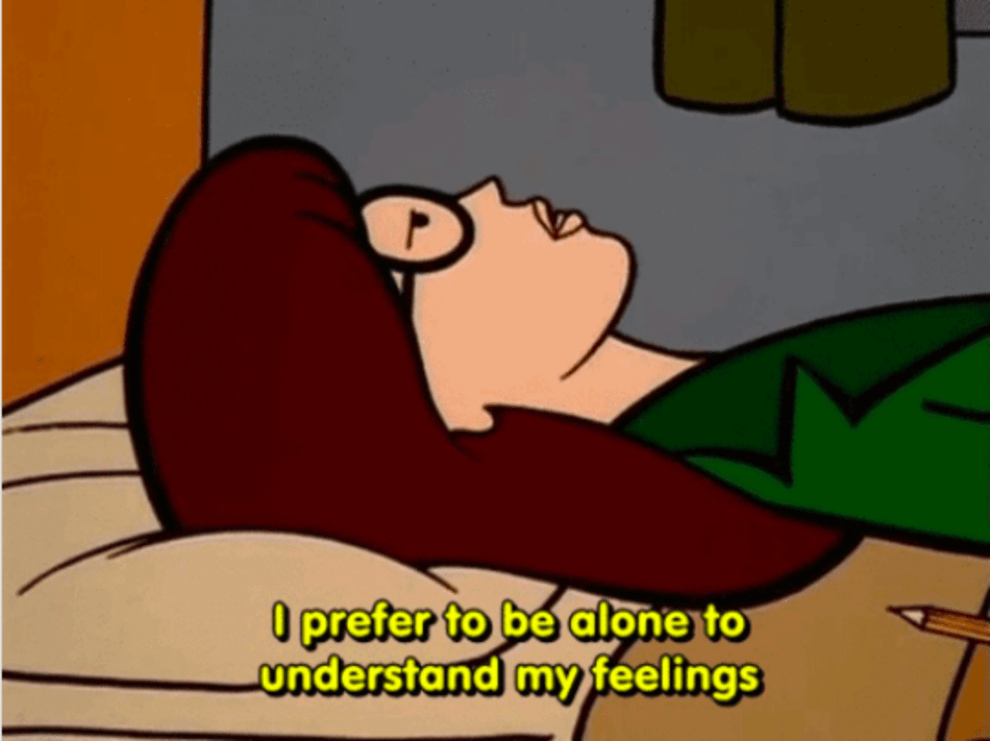
If I were to explain Schizoid PD in more relatable terms, I would say it’s sort of like extreme introversion, where solitude becomes the preferred state for any situation. Social interaction drains your batteries at warp-speed, and the only way to recover and recharge is to withdraw completely.
There isn’t really any treatment available for this disorder, aside from psychotherapy – either individually or in groups – and the occasional short-term treatment of depression or anxiety associated with the disorder.
Part of the reason for this is that people with Schizoid PD generally don’t feel the need to seek therapy in the first place. They (we) don’t feel like there is anything wrong per se, although they (we) do recognize that they (we) are different than most people.
What does it mean – for me?
For me, this diagnosis explains most, if not all, of my personality traits and preferences. I’ve always felt different, like I never quite fit in with any group of friends growing up; always the odd one out. Now I know why that is, and why I shied away from a lot of the usual social interaction in my teenage and young adult life.
In the grand scheme of things, this diagnosis does not change much; it only explains certain quirks of mine, and why I tend to prefer solitary activities, and why most of my friends are online (a “safe distance” away, so to speak).
I’ll continue – well, start up again – seeing a therapist, which I have done more or less constantly for the past decade or so. Ideally, this would be done in person, to “force” myself to interact with someone other than my husband, but as we are still amidst a pandemic causing lockdowns left, right and center, the sessions will probably be via video conference or phone for the time being.
In light of why I saw this psychiatrist at the end of June, and why I now have a new diagnosis to my name, I asked the psychiatrist specifically if the SPD could have snuck up on me in later years. The answer was simple: No. The SPD was there from the very first time I experienced something akin to depression in my early twenties, if not earlier. Essentially, he confirmed that my illnesses were present prior to my 26th birthday, and as such, I am entitled to the “Young Disabled” supplement benefits – which is good news.
So, now I just have to wait for the Disability Benefits Organization to process my application, and approve it. I may still have to fight for the “Young Disabled” part of it, but based on the report from the psychiatric assessment, there should be no reason not to grant me Disability Benefits. The report explicitly states that there is little to no chance of improvement, and as such I would only get worse if forced back to work.

To sum up – nothing has really changed; only difference now is that I have one more puzzle-piece of myself placed, and an explanation for how I ended up the way I have. I’m still me, still the weirdo, the odd one out – but now I know why.
 The Spoonie Saga